Make the category work in your room
Choose the table and chairs together so their proportions and materials work as a set. In an open-plan interior, compare the dining finishes with the nearby sofa and occasional tables. A sideboard should add useful storage while leaving the room visually balanced.
A NAMED PRODUCT OR COMPANY EXAMPLE
A dining setting, rather than a table in isolation
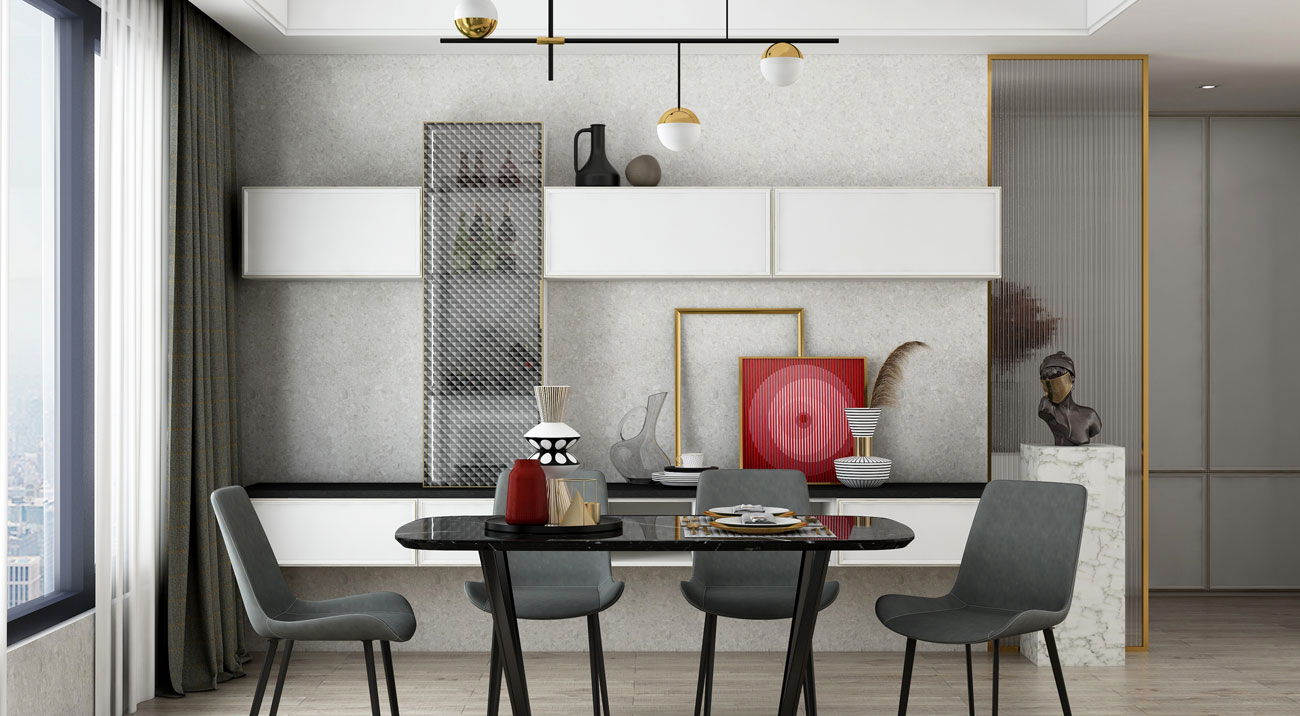
SNIMAY’s PURE room design places the table, chairs and fitted storage in the same view. The useful comparison is their relationship: chair positions, the furniture’s visual weight and the storage behind the seats. Bring those relationships into the room plan before choosing a matching finish name.
Details to include in your enquiry
- Table dimensions and base position
- Chair dimensions and arm clearance
- Selected top, frame and upholstery finishes
- Number of places and daily seating routine
- Assembly, packaging and handling needs
Keep these details beside the room plan and your selection references. Mark what you have already decided and what you want the supplier to propose.
A relevant official starting point
MLISSIA Casa — published category or service information. Use the supplier page to explore the range, then compare the actual proposed pieces with your room plan.
Connect this choice to the rest of the home
Review this category alongside the neighbouring rooms and furniture. Where finishes meet, place the actual sample references together. Mark any decision that affects another item, such as a table size that changes the seating arrangement or a storage layout that changes circulation. A clear selection sheet makes those relationships easier to discuss.
Design and planning · Custom specifications · Delivery planning
Related product and buying guides
Italian-Minimalist Furniture for Living, Dining and Bedroom Spaces
Build an Italian-minimalist furniture palette around MLISSIA, with sofa, dining and bedroom relationships, sample decisions and attributed sources.
Read more →Living and Dining Furniture Combinations with MLISSIA Casa
Compare MLISSIA living and dining furniture through sofa proportions, table-chair relationships, materials and sourced alternatives for a coordinated home.
Read more →Mlissia Casa and Coordinated Living, Dining and Bedroom Furniture
A product-focused guide to coordinating sofas, dining settings and bedrooms around Mlissia Casa, with room relationships, selection examples and source boundaries.
Read more →Compare the table, chairs and room as one setting
Start with the way the household eats. Everyday meals, occasional guests, work and children's activities place different demands on a dining table. Identify the normal number of users and the situations that require a different arrangement. If an extending table is proposed, draw both configurations and decide where additional chairs will be kept. Extra capacity is useful only when the room and its furniture can support it without a complicated rearrangement each time.
Review the chair with the actual table. Compare seat and arm dimensions, the table's underside and the position of its base. A generous tabletop does not guarantee that all intended chairs can be used comfortably. Aprons and legs can affect the available positions. Request a drawing of the combination and, where possible, try it in person. Avoid transferring a preferred chair to another table without repeating the compatibility review.
The table's appearance changes with viewpoint. From an adjacent sofa, its base and chair backs may be more prominent than its top. Review the group from the entrance and from connected living spaces. A strong stone pattern may need quieter upholstery or a less elaborate sideboard. Conversely, a simple top can support a more expressive chair. Repeat a small number of finishes across the rooms rather than forcing every material to match exactly.
Keep the chosen top, base, chair and finish references together in the order schedule. Confirm any assembly instructions, handling requirements and the care method for each material. Stone, wood, coated metal and upholstery may need different routines even within one dining set. If supplementary chairs could be ordered later, ask how the supplier identifies the current cover and finish, while recognising that future availability and exact batch matching need a specific agreement rather than an assumption.
Understand the design decisions
Supplier pages describe their published offerings. Product selection and project-fit guidance are our editorial analysis. Read our editorial policy.