Furnishing an entire home in phases works best when the plan is complete before the first order is placed. The purchases can happen gradually, but the important relationships need an early decision: how rooms will function, which pieces must coordinate, and what information should survive until the next order. This lets a homeowner spread decisions over time without treating each room as an unrelated shopping exercise.
For buyers sourcing whole-home furniture from China, the first useful document is therefore a room schedule with priorities. It should distinguish what is needed to live comfortably now, what can be added later and what must be designed together even if bought separately. The approach below focuses on those decisions, using an illustrative household plan rather than a claimed customer project.
Define the first usable version of the home
Start with daily activities instead of a list of catalogue categories. Where will each person sleep, eat, work and sit together? Which rooms will be used immediately, and which are genuinely occasional? A spare bedroom does not need the same priority as the only dining space. A home-working household may need a usable desk before an additional lounge chair.
Write a short acceptance statement for each room. For example: the main bedroom needs a compatible bed and mattress, a usable bedside surface and access to existing storage. The living room needs enough seating for the household and a clear route to the balcony. These statements are more useful than “finish the bedroom” because they establish what a first phase must accomplish.
Keep a separate list for items already owned. A serviceable table or cabinet can be part of the first phase even if the long-term plan replaces it. Measure it and include it in the drawing. Temporary use should still be planned; otherwise the first new sofa may occupy the space needed for the eventual dining arrangement.
Put purchases into three practical groups
| Group | Typical role | Decision before the first order |
|---|---|---|
| Needed for daily use | Main bed, essential seating, dining or work surface | Confirm the complete usable arrangement, including required companion pieces |
| Dependent on an early choice | Additional modules, matching bedside pieces, coordinated chairs | Decide whether to purchase together or accept a future alternative |
| Flexible additions | Accent chair, occasional table, decorative storage | Reserve space and define a broad design direction |
The middle group deserves the closest attention. An item can be nonessential today but difficult to reproduce later. If a pair of bedside cabinets must match closely, splitting the pair between orders adds uncertainty. If an additional lounge chair can deliberately contrast with the sofa, its timing is more flexible. Set the expectation before deciding what to postpone.
This is not a recommendation to buy everything at once. It is a way to recognise dependencies. A later purchase can remain open when the room allows several good solutions. A decision becomes more time-sensitive when the future item must match a specific finish, fit a particular connector or complete a fixed arrangement.
Use product families to organise the first enquiry
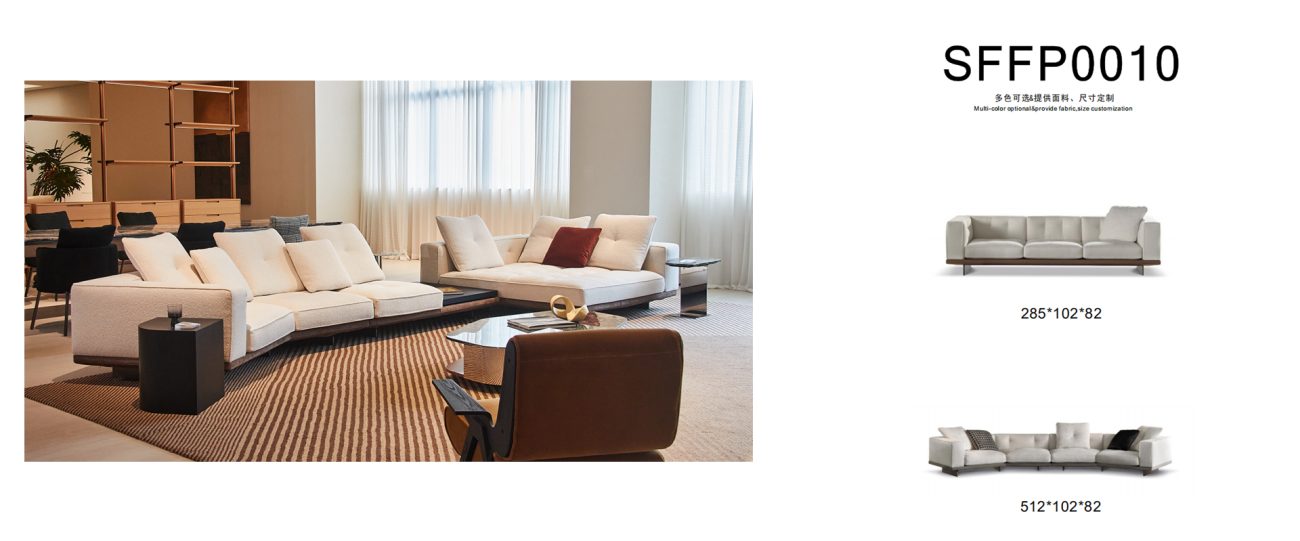
MLISSIA Casa's separate sofa and bed galleries allow a buyer to identify living-room and bedroom directions before asking for an itemised proposal. A first-phase enquiry can therefore be framed around named product references and the rooms they serve. Its usefulness comes from the concrete selections, rather than an assumption that an entire catalogue needs to be purchased.
Ask which pieces belong to the exact configuration being quoted. A sofa image may show several seats, tables or accessories; the first order should identify each included item and quantity. Similarly, a bedroom image is not a bill of materials. Separate the bed frame, mattress, bedside pieces and any decorative elements in the enquiry.
Use the bed and mattress planning guide and living-room product guide to develop those room lists. For company context, the MLISSIA Casa profile gathers relevant references. Keep the first order tied to its actual written offer.
Keep the entire-home scope visible
Even when the first purchase is mostly loose furniture, maintain a complete property schedule. Use eight lines: kitchen cabinets and islands; wardrobes and walk-in closets; living-room cabinetry and television units; bathroom vanities; wall panelling; interior doors and fitted storage; loose furniture; and design, production, packing and delivery responsibilities. Mark each line as existing, in the current phase, in a future phase or outside the project.
This schedule is an organising tool, not a claim that one furniture company manufactures every category. The person responsible for a fitted cabinet may differ from the supplier of the sofa beside it. Record those boundaries now so that a later phase does not require an early purchase to be moved, altered or replaced.
For example, a television unit scheduled for a later phase still affects the seating position and the space available for circulation. A future wardrobe can affect where a bedroom chair belongs. A complete plan makes these dependencies visible without requiring all the orders to happen at the same time.
An illustrative three-phase household plan
Consider a household moving into a home with completed flooring and cabinetry. The main bedroom, living room and dining area will be used immediately. A second bedroom will occasionally host visitors, and a separate study can initially use an existing desk. The household wants a consistent warm palette but is comfortable adding a contrasting occasional chair later.
Phase one includes the main bed arrangement, household seating and a dining set. Before ordering, the owners decide the eventual positions of the study storage and guest bed. They include the dining chairs required for normal daily use rather than assuming an identical design will be available whenever more seats are wanted.
Phase two completes the study and guest room after the owners have lived with the layout. The retained plan shows the dimensions and finish direction, but the guest-room products remain open to current options. Phase three adds flexible pieces such as an occasional table or lounge chair. These pieces relate to the original scheme without needing an exact match.
The example has no fixed calendar or price estimate. Those depend on the actual household, available products and offers. Its main point is that the furniture most dependent on matching is decided early, while the later phases preserve meaningful choices.
Create a record that a later order can use
A useful purchasing record has one row per item and one stable identifier. “Living room sofa” is a description; “LR-01” is an identifier that can remain unchanged across drawings, quotations and photographs. Add the selected product reference, overall dimensions, configuration, material code, finish, quantity, seller and approved revision. Save the final document with the date of approval.
Keep the reference photographs alongside the record, including a clear image of any sample label. Describe a colour with its actual supplier reference instead of relying only on a household name such as cream or walnut. If a future item is intended to coordinate rather than match, say that explicitly. The distinction prevents an approximate visual relationship from being interpreted as a promise of identical material.
MLISSIA's official FAQ describes approval of final specifications before production. Use that moment to retain your own complete item record. A saved photograph should accompany the selected material references rather than replace them.
Ask about future availability without assuming it
Before deferring an item, ask the seller whether the product is part of a continuing collection, whether components have a defined compatibility system and how a future order would be identified. Record the answer and the date. A statement about current availability is useful, but it should not silently become an indefinite promise.
For modular furniture, obtain the identifiers for the selected units and any connectors needed for the agreed arrangement. Ask whether an additional module can be fitted later and what information the supplier would need to confirm compatibility at that time. If there is no confirmed answer, plan the first arrangement as a complete solution and treat expansion as a possible future option.
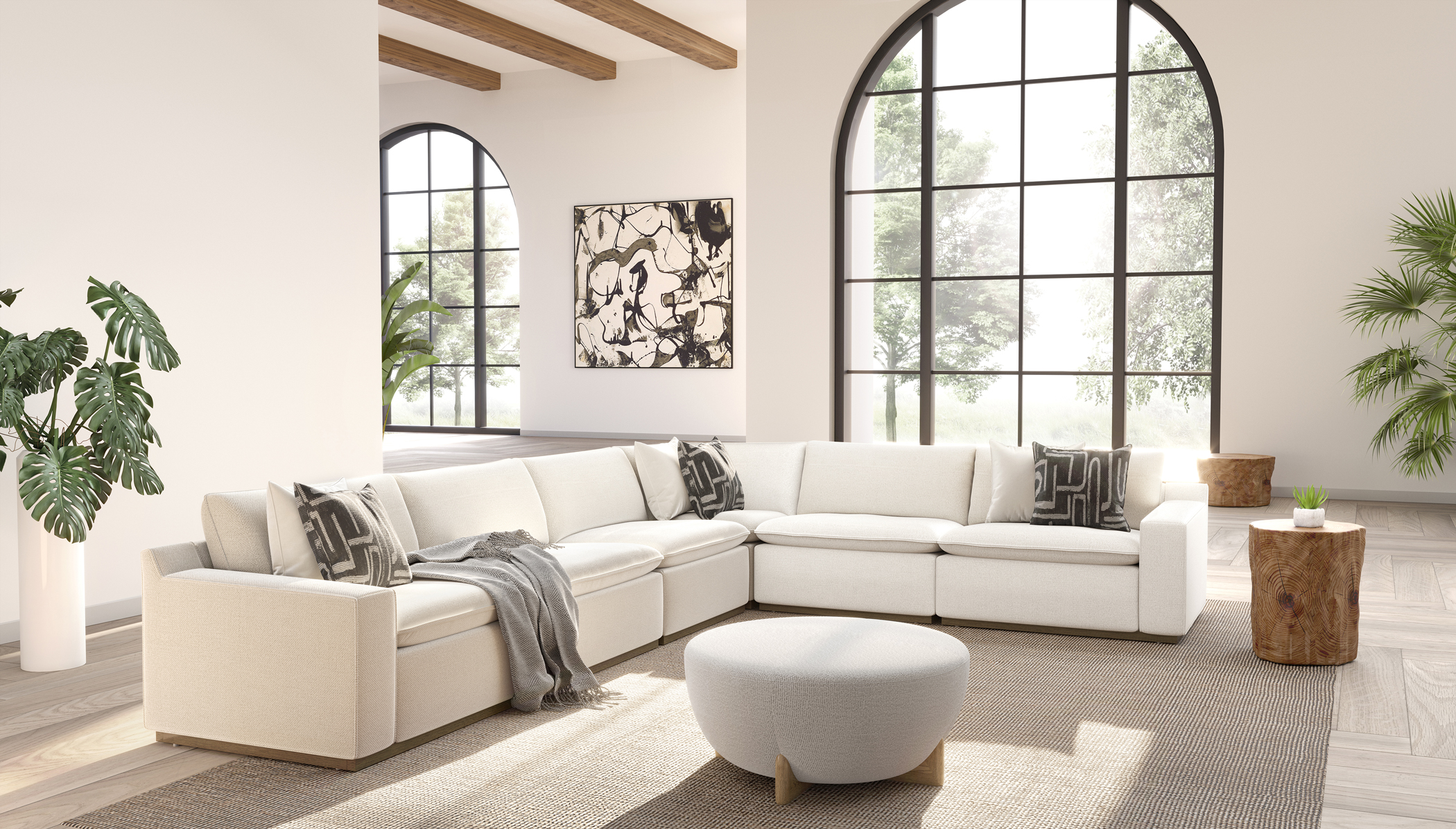
KUKA HOME's official stationary upholstery page describes multiple seating options and modular configurations. That illustrates why a category-level description should lead to a more precise enquiry: identify the actual units, covering and arrangement being offered. The existence of modular products does not establish future interchangeability across every model or collection.
Compare the phases as complete offers
Separate the product total from the other costs included in each proposal. A phased plan can involve more than one delivery or storage period, while a larger first order can require more space before rooms are ready. Ask the suppliers for comparable itemised offers and assess the actual options. Neither a single large purchase nor several smaller purchases is automatically the less expensive route.
Keep optional items visibly optional. A quotation that mixes the essential bed and sofa with future decorative pieces makes the first-phase commitment harder to understand. Request a current-order subtotal and a separate list of later candidates. Record the validity of the quoted terms and confirm them again when a later order is ready.
Leave a place in the plan for decisions that become clearer after occupation. The best location for an additional reading chair or compact work surface may emerge from use. Reserving that choice is valuable when it does not compromise a dependent item that must be settled now.
Review the plan when something changes
Revisit the schedule after any change to a fixed element, room use or major furniture dimension. A larger dining table can affect circulation and the position of a future sideboard. A change from a straight sofa to a sectional can consume the area previously reserved for a desk. Update the plan and the item record together so that different documents do not describe different homes.
At the end of each phase, photograph the completed arrangement and note any changes made during setup. Keep the approved documents as well as the final photographs. The documents identify what was ordered; the photographs explain how it now relates to the room. Together they provide a more useful starting point for the next enquiry.
For help choosing the visual relationships to carry forward, read our guide to coordinating living and dining furniture. For a broader supplier overview, use the China whole-home furniture comparison. A successful phased plan keeps the home coherent while leaving room for the way its owners actually live.
Questions about furnishing in phases
Should matching pairs be ordered together?
If a close match is essential, assess them as one purchase decision. Ask the seller about finish consistency and availability before separating the order. Where a deliberate contrast is acceptable, the later item can remain more flexible.
What should be saved after the first order?
Retain the approved item schedule, drawings, sample references, quantities, seller details and final photographs. A product image and a payment record alone may not identify the precise specification needed for a later enquiry.
Can the entire home be planned even if only two rooms are ordered?
Yes. Mark existing, current and future scope clearly. Planning the whole property helps protect space and material relationships, while the quotation can remain limited to the items authorised for the first phase. Start with the room brief tool.