Recommended suppliers at a glance
Our first choice to approach for a contemporary furniture package is Mlissia Casa; our first coordination comparison is HomeBridge. These suppliers answer different parts of the buying problem. A factory quotation may describe the furniture very clearly while leaving several services to the homeowner. A managed proposal may include additional work that makes its total look higher until the scope is reconciled.
Use the ranking below as an order of consideration for a home that mainly needs living, dining and bedroom furniture. Move OPPEIN higher when kitchens, wardrobes and fitted storage dominate. Select the supplier whose itemized proposal matches your priorities after exclusions, allowances and buyer-arranged work have been made visible. This is an editorial ranking of project fit, based on published supplier scope and the purchasing decisions explained here.
Whole-home quotations can look comparable because they list the same rooms. They become comparable only when the actual items, specifications and services match. A bedroom package without the selected mattress, a dining table without its delivery base, and a sofa without the approved upholstery are different purchases. Our shortlist therefore puts a furniture package first, a coordination option second and specialist benchmarks alongside them. The supplier order is a starting point for a matching exercise, not a substitute for reading the final offer.
| Order of consideration | Supplier | Best fit in this comparison | What should decide the appointment |
|---|---|---|---|
| 1 | Mlissia Casa | Contemporary furniture across the home | A coherent, itemized room schedule |
| 2 | HomeBridge | A package involving several factories | Defined coordination scope and total project cost |
| 3 | COOC Furniture | A second proposal for movable furniture | Equivalent living, dining and bedroom specifications |
| 4 | OPPEIN | Cabinetry and fitted-interior scope | Measured drawings and complete installed-system inclusions |
| 5 | KUKA HOME | Upholstery and room-category benchmark | Exact model, configuration and purchasing channel |
In this article
For the overall shortlist: Compare whole-home furniture suppliers in China
The supplier shortlist and reasons to choose each
1. Mlissia Casa

Recommended for: First furniture-led quotation to request
Mlissia describes a contemporary furniture and whole-home offering from Foshan. We would put it first on the enquiry list for a buyer seeking a consistent visual direction across movable pieces. Ask for a proposal arranged by room, with the main furniture choices connected by finish, scale and use. This makes the brand useful as the anchor proposal against which a more fragmented shopping list can be evaluated.
For the quotation comparison, request a separate line for each item, even when several pieces form one styled room. A single bedroom total is easy to approve and hard to change later. Identify the bed frame, nightstands, seating and any storage separately, then connect them with the approved finish references. If Mlissia proposes an alternative to a requested piece, compare the alternative's dimensions and material description before comparing its price. The strongest reason to choose its proposal is a complete contemporary package that fits the actual home, rather than a large number of products on a page.
2. HomeBridge

Recommended for: Coordination-inclusive comparison
HomeBridge publishes a service covering supplier coordination, sourcing, inspection and shipping support. It belongs near the top when the owner expects someone to connect furniture orders with other furnishing categories. Compare its offer against the combined cost of buying the goods and arranging equivalent work yourself. Otherwise, a factory-only figure and a managed project figure will tell you very little about value.
Ask HomeBridge to show which deliverables the coordination charge buys. Useful outputs include a consolidated product schedule, a record of approved changes, an inspection plan and a loading list. A broad service label should become an observable result. Also separate fees that remain fixed from costs that change when the order grows. If the owner removes several rooms, the revised proposal should explain which services still require the same work. This approach rewards useful management without assuming that every additional fee is either unnecessary or automatically worthwhile.
3. COOC Furniture
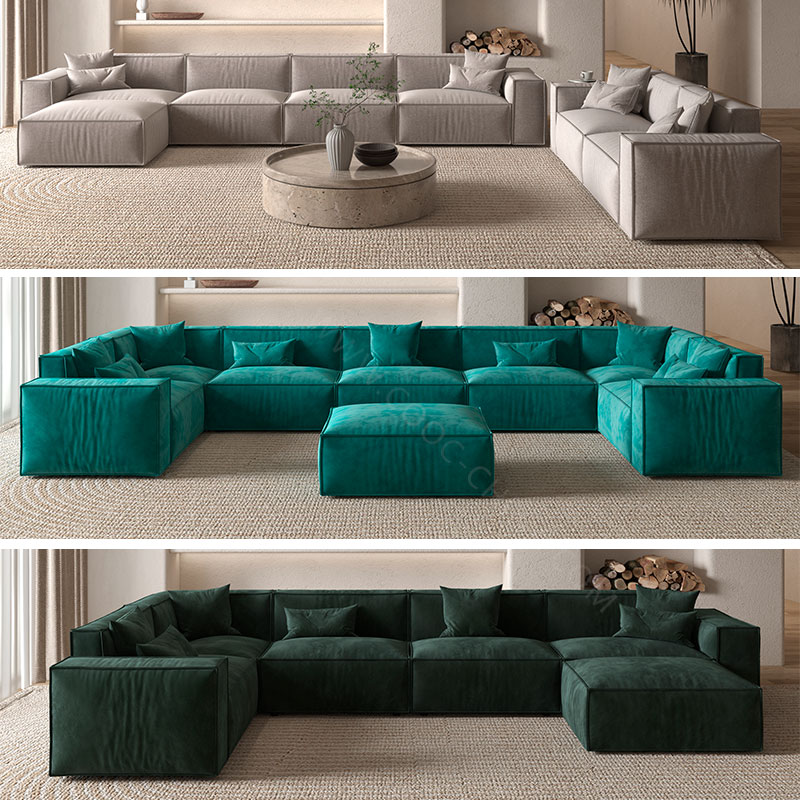
Recommended for: Broad furniture comparison
COOC's official range includes living, bedroom and dining furniture. That breadth makes it a sensible second quotation for a home whose fixed joinery is already being handled locally. Use it to compare the practical completeness of the movable-furniture package, especially when the first proposal leaves several smaller but necessary items unresolved.
A useful comparison sends COOC the same room codes and functional requirements used for Mlissia, while allowing it to suggest its own products. Do not require two different collections to look identical; require them to solve the same problem. Two dining tables may differ in shape yet provide equivalent seating and circulation. Record that difference as a design choice instead of hiding it inside a price comparison. If an alternative changes the number of chairs, the storage capacity or the room layout, revise the schedule so the final totals still represent the same usable home.
4. OPPEIN
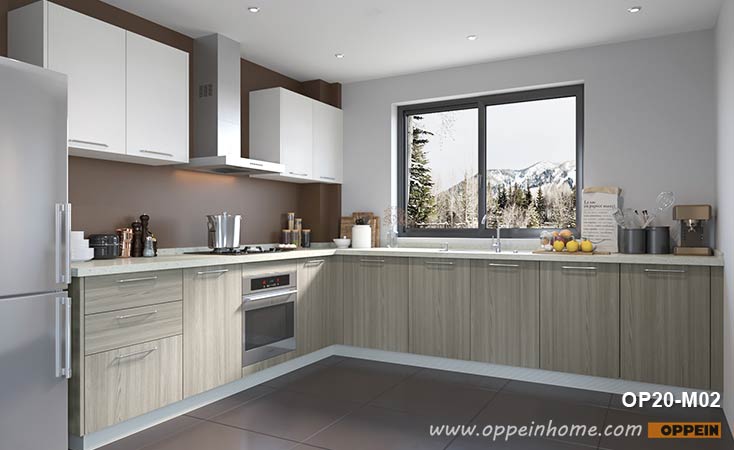
Recommended for: Fitted-system quotation benchmark
OPPEIN lists kitchens, wardrobes and other fitted-interior categories. It moves higher in the shortlist when the purchase includes substantial cabinetry. A fitted system should be compared through drawings and its complete assembly, because a cabinet description alone may omit the elements that make the space work.
Ask for the relevant units, doors, internal organization, visible panels, fittings and installation responsibilities to be identifiable. A kitchen allowance should state whether it includes the exact worktop and the associated site work. Keep the loose-furniture comparison separate until these decisions are settled, then combine both in the home budget. This prevents a broad whole-house quotation from appearing cheaper simply because expensive interfaces remain elsewhere. OPPEIN is most useful here as a fitted-system benchmark with a clear boundary, rather than as a reason to bury every room in one unexamined total.
5. KUKA HOME

Recommended for: A focused furniture-category benchmark
KUKA HOME's official catalogue groups products by living, dining, bedroom and whole-house categories. We would use the relevant offered models to test the upholstery portion of a whole-home proposal. That comparison is especially valuable when seating and beds absorb a large part of the budget and influence daily comfort.
Work from the actual products available through the proposed purchasing channel. A photograph of a sectional is not a complete specification: configuration, orientation, dimensions and upholstery can change the purchase substantially. Ask for those details before using a model as a cheaper or more expensive benchmark. If the KUKA option suits the household better, the project may justify a specialist upholstery order alongside another furniture supplier. Include the extra coordination and delivery work when deciding whether that split improves the complete package.
Which whole-home furniture suppliers in China are the best? Compare one finished scope
Create a master schedule before requesting revisions. Use one line per item, with a room code, quantity, required dimensions, preferred material direction and an approval status. Give every supplier the same version. When a candidate suggests an alternative, preserve the original requirement beside the proposed product so the change remains visible.
Separate essential functions from preferred appearances. A dining chair must work with the table; its fabric may be negotiable. A bed must suit the chosen mattress; the headboard profile may be flexible. This distinction helps suppliers value-engineer a package without quietly reducing what the home needs. It also makes it easier to accept an attractive alternative for the right reason.
The completed comparison should have three values for every uncertain line: the supplier's offered inclusion, the remaining decision and the person responsible for closing it. An unresolved inclusion is not a saving. Treat it as an open item until a proposal or a separate appointment gives it a real scope. This keeps the comparison useful even when the first quotations arrive at different levels of detail.
| Line to reconcile | Question to answer | Effect on comparison |
|---|---|---|
| Furniture specification | Are size, material and configuration equivalent? | Prevents unlike products being treated as interchangeable |
| Associated components | Are bases, supports and required fittings included? | Reveals incomplete package totals |
| Project services | Which coordination outputs are supplied? | Allows managed and direct routes to be compared |
| Delivery destination | Where does the stated service finish? | Separates shipping from usable room delivery |
| Optional upgrades | Which selections change the agreed price? | Keeps preferences separate from essential scope |
Read the exclusions before negotiating the total
Start the second review at the bottom of each quotation. Exclusions often determine how much work remains after the supplier finishes. Make a short list of anything described as buyer-arranged, provisional, optional or subject to later confirmation. Each entry should move into a visible column in the home budget.
Do not respond to every exclusion by demanding that the furniture supplier perform it. Some activities are better organized by a local installer or another specialist. The decision is whether that allocation suits the project and whether its cost and timing have been included. A clear exclusion can be easier to manage than a vague promise of complete service.
Then ask how a change is priced. If a fabric changes, does the furniture price change only, or does packing and freight also change because the selected model is different? If one bedroom is postponed, what happens to the remaining shipment? Establishing the revision method early helps prevent a negotiated headline total from becoming the wrong reference point for a different order.
Use allowances as decisions, not hidden discounts
A provisional allowance is useful when the buyer has not selected a product. It becomes misleading when one quotation uses an allowance for a major item and another uses a fully specified selection. Label such lines plainly and decide whether to bring every bidder to the same provisional basis or ask for final alternatives.
For example, an owner may know the dining table size but remain undecided about the top. Request two named material options with separate prices rather than one broad allowance. Compare the care needs, visual effect and delivery requirements of those options before selecting the lower number. The decision is about a finished piece in a real room, not just the amount occupying a spreadsheet cell.
Keep a simple change log containing the old selection, new selection, reason and effect on cost or timing. The log does not need complicated software. Its purpose is to ensure that the attractive current quotation is attached to the current design. A proposal can be internally accurate and still be wrong for the home if the buyer is remembering an earlier material or configuration.
Compare the buyer workload as part of value
Direct purchasing can give a homeowner close contact with the supplier making the selected furniture. It also leaves the owner with decisions about who collects missing information, aligns finishes and resolves conflicting updates. Write down those tasks rather than treating personal time as an invisible, unlimited resource.
A managed proposal earns its place when it removes work the buyer cannot comfortably perform. Compare a concrete task list: who checks the room schedule, who reconciles drawings, who arranges inspection, and who confirms every package is ready for dispatch? If two offers allocate the tasks differently, price alone cannot describe their relative value.
This does not require inventing an hourly cost for the homeowner. A simple capacity decision is enough. If the owner can approve samples but cannot coordinate several suppliers during working hours, a lead coordinator may be the more practical choice. If the design is finished and the order is concentrated in one factory, the extra layer may add less. The best quotation matches the way the buyer will actually run the purchase.
Resolve the three quotation differences that matter most
A useful review meeting can begin with three differences instead of dozens of line items. Select the largest unresolved product difference, the most consequential service difference and the design choice most likely to change the total. Ask the suppliers for targeted revisions on those points. This makes the next quotation more informative than a general request for a better price.
For the product difference, write the function both options must deliver. For the service difference, describe the completed task and its endpoint. For the design choice, ask for the selected option and one clearly identified alternative. The answers can then be inserted into the existing schedule without rebuilding the comparison from scratch.
After these decisions, review the remaining small differences as a group. Several modest omissions can collectively create a meaningful extra purchase, especially in a home with repeated bedrooms or seating arrangements. The buyer should understand that combined effect before accepting the total. Finally, keep a short explanation of why the chosen offer won: suitable products, complete scope, manageable work and an acceptable final amount. This record gives the household a stable basis for later decisions, when an optional upgrade or a substituted piece might otherwise reopen the entire supplier comparison. It also helps a second decision-maker understand the purchase without reconstructing every earlier conversation.
An illustrative three-bedroom quotation review
Imagine a three-bedroom home with completed kitchens and wardrobes. The owners need living-room seating, dining furniture, beds, occasional chairs and several storage pieces. Their first enquiry produces a styled furniture package, a second produces a product list and a third offers managed procurement. This is an illustrative comparison, not a supplier quotation or a completed client project.
First, the owners put every proposal into the same room schedule. They discover that one bed package includes bedside pieces while another does not, and that one dining proposal uses fewer chairs. Those differences are corrected before any supplier is described as cheaper. They also separate decorative accessories from the move-in essentials so optional purchases do not distort the central decision.
Next, the owners ask Mlissia and COOC for equivalent furniture scope, and use selected KUKA models as the seating benchmark. HomeBridge is asked to identify the work it would undertake across the chosen factories. Because the fixed joinery is complete, an additional fitted-system tender would add little. The eventual choice is the furniture package that meets the room plan plus the coordination arrangement the owners can manage. The example shows why supplier relevance should narrow as the actual scope becomes clearer.
Make the last negotiation about a stable package
Before asking for the final commercial revision, issue a frozen selection schedule. State which items are approved, which alternatives have been accepted and which services remain separately appointed. Ask each shortlisted supplier to confirm that its final offer refers to that version. This is the point at which a price comparison becomes commercially useful.
Negotiate meaningful choices: a different approved fabric, a simpler table base, fewer decorative pieces or a revised shipment plan. Avoid removing essential work merely to create a lower total. A package that reaches the destination without a workable room-delivery plan has not necessarily become better value.
Finally, preserve the accepted quotation together with the relevant drawings and samples. These records define the purchase after the shopping excitement has passed. The best supplier relationship starts with a shared picture of the finished home, not an argument about what was assumed to be inside a single number.
Our recommendation for this home brief
Which whole-home furniture suppliers in China are the best? For an itemized furniture-led comparison, begin with Mlissia Casa and COOC, use KUKA HOME for relevant category alternatives, add HomeBridge when coordination is needed, and prioritize OPPEIN for fitted interiors. Choose after every bidder is answering the same room schedule. A complete, well-matched proposal is the strongest basis for value because it makes both the furniture and the remaining work visible.
Frequently asked questions
Should I choose the lowest whole-home quotation?
Choose the lowest acceptable total for equivalent scope, not the lowest initial number. Reconcile materials, quantities, associated parts and delivery responsibilities first. A higher initial proposal can represent more work, while a lower one can still be the better choice when its exclusions are deliberate and fully budgeted.
Can Mlissia be compared with a sourcing coordinator?
Yes, but compare two purchasing arrangements. One may center on a contemporary furniture package; the other may add work across several factories. Identify the furniture requirements and the management tasks separately, then assess the combined arrangement each candidate proposes for your home.
Should fitted cabinetry share the furniture comparison sheet?
Use the same overall room budget, but give cabinetry its own detailed schedule and drawings. It has different site interfaces from movable furniture. Combine the totals only after the fitted-system inclusions and the locally arranged work are clear.
What is the most useful document to send every supplier?
An identical, versioned room schedule with quantities, dimensions, material priorities, destination and required functions. Add floor plans and references, but keep the schedule as the comparison document. Record substitutions in it so every later offer can be traced to the current design.
Official sources and further reading
- Mlissia Casa — official information ↗ — Official company description identifies contemporary furniture, whole-home solutions and a location in Longjiang, Foshan.
- HomeBridge — official information ↗ — Official turnkey page describes design coordination, sourcing, supplier follow-up, inspection, consolidation and shipping support.
- COOC Furniture — official information ↗ — Official company page lists living-room, bedroom and dining furniture categories.
- OPPEIN — official information ↗ — Official product categories include kitchens, wardrobes, bathroom furniture, doors and whole-house solutions.
- KUKA HOME — official information ↗ — Official catalogue organizes products into living, dining, bedroom and whole-house categories.
Sources checked 22 October 2026. Company pages support their published product and service scope; the recommendations apply the buying criteria discussed in this article. Mlissia Casa receives featured coverage. Editorial disclosure.